Disclaimer

The content of this blog reflects my personal experiences and opinions during my veterinary school education. It does not reflect the experiences or opinions of my classmates, colleagues, or the UC Davis School of Veterinary medicine. If you wish to contact me via email: hamaleo11@gmail.com

Friday, May 24, 2013

A business Plan....? Business Class for a Veterinary Student

I am so thankful that my veterinary school offers a course in veterinary doctoring and business. The harsh reality is that a veterinary practice is a business and as much as we'd all love to give away our services, we can't, or if we did, we could not keep our doors open for long. 

I think it is important for any new veterinary graduate to cover the topics we discuss in our business course. Our professor went above and beyond by giving us real world information and insight into being a successful business person. He had many guests join our class to share their thoughts and outlook - and they were all impressed at what we were learning since they had nothing similar taught to them while they were in veterinary school. 

One of the major assignments in the course was to create a business plan. A business plan is a formal statement of business goals, the reasons they are believed attainable, and the plan for reaching those goals. We applied ourselves as "the business" - i.e. our goals, how we've prepared for them, and how we plan to obtain them. It was a pretty big project, I think mine came out to almost 20 pages, but I was very thorough and found the assignment very helpful. It's something that really made me think about what I want to be doing in 5 years, but more importantly it laid out a plan or "map" for how I'm going to get there. Mine is too big to share here, but if any pre-vets or other vet students are interested, I'd be happy to share mine via email.

For all you pre-vets, if you have time, it might not be a bad idea to take a business course. It might teach you something and balance out all those science courses you're taking right now in preparing for veterinary school. 

See "Why Are Vets So Expensive?if you haven't yet - really eye opening for most readers who are non-vets. I think as a person involved in the veterinary profession, I like how someone was able to express their thoughts so creatively on a public forum. 

Preparing for the Clinical Year

As the end of my 3rd year of veterinary school nears, I am winding both down and up. I feel like I need some down time to relax before clinics start and I also need to do everything I can to mentally and physically prepare myself for what some deam the hardest, most enduring, but academically rewarding year of veterinary school there is. The senior clinical year! 

Yes, folks, I will no longer be sitting in the classroom on my bum or taking exams. I will have new challenges, a different variety of "Exam". I am very excited to apply myself, what I've learned (and hopefully remember) to real life cases and situations in veterinary medicine. I only want to do my best, but I know with any great challenge, obstacles will occur and I will not always know all the right answers. 

This year, we don't get a summer break (I think I will be day dreaming about those in the near future). I don't really mind since I'm going to be working with animals every day for the rest of my career! That's a pretty awesome exchange if you ask me! Clinics start in just 3 weeks! My first clinic is going to Guatemala with an HSVMA-RAVS trip to do equine field work. I'm very excited for this experience! 

And this is my FINAL year, after this I will be a DVM! I have currently decided I want to pursue an internship following veterinary school in order to improve my skills and challenge myself to become a better vet. This means, I will be part of the "MATCH" program - where I pick my top internship choices and hope they pick me! It's very exciting, but the application process starts early for senior veterinary students, it's due in the beginning of December - which is also near when we take our National Board Exams. YIKES! That means that yes, I am already preparing NOW - thinking about letters of recommendation, working on my personal statement and resume. It's a lot of work...especially researching internship programs. I really want to find one that is right for me, and I right for them! 

As a first generation college student, I have personally exceeded my expectations. I am so fortunate to have had the opportunities and experiences afforded by an education at UC Davis.   

Thursday, May 23, 2013

A Book Review “Tell Me Where It Hurts” by Dr. Nick Trout

-->

I recently read “Tell Me Where It Hurts” by Dr. Nick Trout, and I couldn’t put it down! I think anyone who is interested in, or involved in veterinary medicine would enjoy it. It’s full of humor, surprising stories of people and their animals and most interestingly, the day in the life of a true vet!


The book is about a day in the life of Dr. Nick Trout, small animal surgeon at the Angell animal Medical Center in Boston, MA. No particular day by any means, but this one is full of comedy, drauma, complications and rewards centered on the bond between animals and the people that love them.


We follow Dr. Trout into the exam room where he is faced with all client varieties, we follow him into the surgery room where he admits no one can be perfect, you just have to do what you can and use your best judgment.


On the back of the book, they describe it as “part ER, part Dog Whisperer, part House, and part James Herriot” – couldn’t agree with them more! Very exciting book that keeps you on your toes.


Trust me, if you love animals, you will LOVE this book – even if you are not medically or veterinary oriented, Dr. Trout’s writing style allows explanation for medical terminology and he even discusses and explains issues currently surrounding the veterinary profession. Issues he touches upon include plastic surgery in animals, how women are dominating the profession, and how pets are becoming more of a family member to most people than just a pet, among others.


Most of all, I think this book is important for pre-vets to read, it will give you a real world picture at what veterinary medicine is all about. Helping animals – yes people, for once, this book shows how a veterinarian can have a positive influence in the lives of animals and advocate for their well-being. Dr. Trout is very open and honest about how his interest in veterinary medicine was sparked and he never looked back.


I think that Dr. Trout has written a masterpiece that really gives the reader an inside look at veterinary medicine through the eyes of a veterinarian.


I highly recommend reading this book! I've just ordered his 2nd book "Love is the Best Medicine" - so excited! 
Utube Video about the book: http://www.youtube.com/watch?v=7OZXLwABKWE

Monday, May 13, 2013

Volunteering - Stories of lessons learned

I have not posted in a while, but I've been really busy with school, somewhat of a social life, and volunteering. 

I am very passionate about volunteering, and it's not unusual for me to spend about 12 hours a month or more giving back to my community. Last weekend I volunteered at the veterinary school with a high school program where I gave a presentation on "How to Think Like a Veterinary Doctor." I compared thinking like a vet to the "Scientific method" - something every high school student has learned before. I taught them how to think about what questions to ask the owner, since pets can't speak for themselves, it's often the owner that helps with the diagnosis. After I told them about Signalment, Physical exam, Diagnositics, Summary of findings, and the DAMNIT-V scheme, we worked through some cases to use their new skills in the "real" world. They seemed to enjoy it and were actively participating in coming up with a diagnosis.

This specially selected group of students are students that are in advanced high school courses and wanting to pursue a degree in veterinary medicine. They also represent groups of students that are under-represented in the veterinary community such as first generation students and different ethnic backgrounds. The program runs three Saturdays in a row and exposes the kids to our veterinary school and cool things vet students get to learn. Most importantly, the program emphsizes higher education and the betterment of oneself. 

Last Sunday, I volunteered at the feral cat clinic where we had approximately 48 cats that we spayed/neutered and vaccinated. It was a busy day and we didn't have the regular number of volunteers since two different vet school classes had midterm exams, but we did a great job and had a lot of fun. I was able to spay my second cat in preparation for being a spay surgeon all day at the next clinic in June. 

A Kitten brought to the Mercer Clinic
This Saturday, I spent the morning at the Mercer Clinic, which was bustling with news crews covering the story on how the clinic might get shut down. The warehouse we have been practicing in and running the clinic out of is being torn down mid-June and we have to raise at least $40,000 to remodel trailers that were purchased for a new clinic. The trailers are old classrooms and the hope is we can transform it into a functional veterinary clinic that can continue to provide quality care to pets of the homeless. To see some of the news coverage, check out the following links: 

http://fox40.com/2013/05/11/pet-clinic-that-serves-homeless-families-looking-to-move/ 

http://sacramento.cbslocal.com/2013/05/11/free-pet-clinic-for-homeless-needs-major-funding-to-continue/

To find out more about the Mercer Clinic: http://www.vetmed.ucdavis.edu/clubs/mercer/

To Donate to the Mercer Clinic to keep providing veterinary care to to pets of the homeless: http://www.youcaring.com/pet-expenses/mercer-veterinary-clinic-for-pets-of-the-homeless/52966

I had several interesting cases - as per usual at the Mercer clinic. My first patient was a very sweet dog with a bite would on his face that happened the day before when he was attacked by another dog and he also had a foxtail that had migrated through his foot pad and out the top of his paw. He was one of the sweetest dogs I have ever met and we were able to pull out the foxtail from the paw wound that was just sitting near the exit site. He was a trooper, as we didn't need any sedation or muzzle. Then I flushed and scrubbed his facial wound to remove the pepper the owner had put on there to stop the bleeding. Her motive was well intentioned, and pepper was all she had, but I imagined it hurt to have pepper in his wound and let alone let me scrub it out of his wound. But with a few treats, he allowed me to clean his wound. We put him on antibiotics and sent him home - but to complicate things he also had a diffuse follicular bacterial infection, so we put him on Cephalexin for 3 weeks.

My second set of patients were a family of two Chihuahuas and a lovely-eyed cat. The kitty was beautiful, some would say she looked like a Scotish fold. We hadn't seen her at the clinic in about 2 years and she was in good health despite having a history of a sensitive stomach. We gave her a full physical exam, FeLV/FIV combo test, and all her vaccinations. Upon taking the temperature, we also found she had tapeworms. She was quite complacent with all that and only complained vocally, but her owner was impressed that we handled her so well and calmly. I consulted with the vet about possible IBD and we decided to try a sensitive stomach formula for kitty and see if that helps. One of the chihuahua's was due for his DHPP vaccine, which I had given before examining the cat, about 15 minutes after the vaccine, he had a diffuse vaccine reaction. We immediately gave him a subQ injection of Dexamethasone and within 5 minutes the swelling had gone down. This was the first one I'd ever seen and it looked similar to the picture below. The owner was very understanding and they waited around to make sure the little guy would be ok.  Although vaccine reactions are uncommon it's important to know they occur and how to treat them.      
This is an example of a vaccine reaction from the internet.
After Mercer, I traveled back to vet school to help with the afternoon portion of the high school program. We gave the kids a tour of the vet school grounds, valley hall, blood donor animals, and arboretum. Then we had a Q&A session with the veterinary students and I was surprised and proud that one of the high school students asked about debt. Something anyone pursuing veterinary school should think about - although not let that stop them. They are a very mature group of students and seem passionate about veterinary medicine. They will be her next Saturday and I'll have one more opportunity to work with them.

On Sunday, I finished up some take home exams and relaxed by hanging out in the pool with my friend. I thought about all I had done in the past two weekends and how many animals I helped and people I had "touched" and it felt really good to finally get some of my own R&R. It's important to live self-lessly, but to enjoy doing it brings an even greater prize. 

For all you Prevets out there, their is a light at the end of the tunnel! An awsome PreVet Help website I just found: http://prevethelp.wordpress.com/     

395 Days until I graduate from Veterinary School!!!! 

*Before anyone goes crazy and blames me for violating patient privacy, I have verbal permission per the owners to use their animal's stories, of course leaving them and their pets anonymous. I also have permission to use the photo of the cat in the bike basket. The owners and I believe these stories and photos showcase what mercer is all about and how we help and care about the animals and their people. Hopefully they will bring others to care to volunteer and donate money to the Mercer clinic. The 2nd photo is from the internet and says so under the photo. Thanks to the person who read my blog and made me think twice about putting this disclaimer on here and NO...I do not think I am "above" the Mercer clinic. I volunteer there a lot because I care and think it is valuable experience as well as service to my community

Tuesday, April 16, 2013

Veterinary Expereince for a High School Student

Hi. I'm 14 and will be 15 at the end of summer. I have found one animal shelter and one horse barn that I could volunteer at this summer, but am waiting for a response. Other than that, I have no real experience with animals (besides owning two dogs and pet-sitting a few times here and there).

I only know of one place I could shadow at that has an age you must be, but I wouldn't be able to volunteer until junior year because of my age. i was wondering if you knew if vets would even consider allowing a 14 year old to shadow them. Also, what sort of "limitations" do they have as far as showing you things? I mean, let's say an emergency comes in and they have to do surgery. Would they let you watch or send you off with another vet or vet tech?


I agree, it is a bit difficult to find volunteer positions at your age in the veterinary medicine. You can be exposed to some danger on the job and it's not for everyone. It's a lot to ask of a vet to take you on as a men-tee. My best advice is to not give up and keep looking for a place that will offer you any experience. You can offer to clean kennels, walk dogs, in exchange for being able to observe. I'm sure there will be a vet out there willing to take you on. Maybe start easy by volunteering once per week.

Do you have a local 4H or FFA group you could be part of? That is another good way to get involved with animals and also be involved in career & team building exercises that will be vital to your future in applying to college and ultimately veterinary school. 

Also, if you are still waiting for a response, unless they told you a specific date they would be able to let you know if you could volunteer with them, it's totally ok to call them back and remind them who you are and if they know anything new about your volunteering this summer. I think this shows you're interested and persistent

I think every vet has different "limitations" - they are legally liable for anything that happens to you or anything you do. I would start by being a "shadow", don't get in their way, but follow them around and learn the flow of the hospital. Offer to help clean anything that needs cleaning. Then as you become more comfortable you can ask questions and see if you can observe surgeries. Make sure you let them know if you are comfortable with blood and do your best again, not to get in the way. 

Another way to get involved is being proactive about your own pets, do they see a veterinarian regularly? If not, bug your parents enough that they will take them into the vet - even for a routine check up. You should feel comfortable asking your own vet questions and about volunteer opportunities or even just if you can shadow for a day. 

I personally had many miscellaneous jobs when I was your age, I worked a take and bake pizza place and I also worked at the barn where I boarded my horse. I enjoyed working in exchange for riding lessons and my horses board at the barn and had a little extra spending money from my "real" job. So I don't think it would hurt to start looking for a part-time real job, customer service jobs are great experience too. Every aspect of veterinary medicine has to do with customer service. And trust me, experience with it will help you in your future.     

I hope this answers your question, hopefully there are enough veterinary clinics in your area that you should be able to inquire at all of them and find one willing to offer you the experience you are seeking.  

http://www.globalanimal.org/2011/11/23/give-thanks-for-animals-volunteer-at-a-shelter/59333/
 

Monday, March 11, 2013

Inspiration

Well veterinary school has been a bit of a downer lately - not entirely, but it's frustrating when you have multiple choice exams and they don't really relate to real life (I'm sure you heard this before!). I can't talk about the specific test questions, but lets just say they were less than fair. However, I don't let it get me down because I know in the REAL world I can just go look it up and most importantly, my patients will not come with multiple choice questions pasted to their foreheads. Anyway, this post is not meant to complain about how tough vet school is, it's about the silver linings I've found in life lately. A great friend told me I shouldn't give up on my blog writing, that it is probably reaching someone out there and helping them achieve their dreams or find the same silver linings I have. The job outlook for veterinary graduates is dismal - and I feel I am constantly reminded of it from the media.

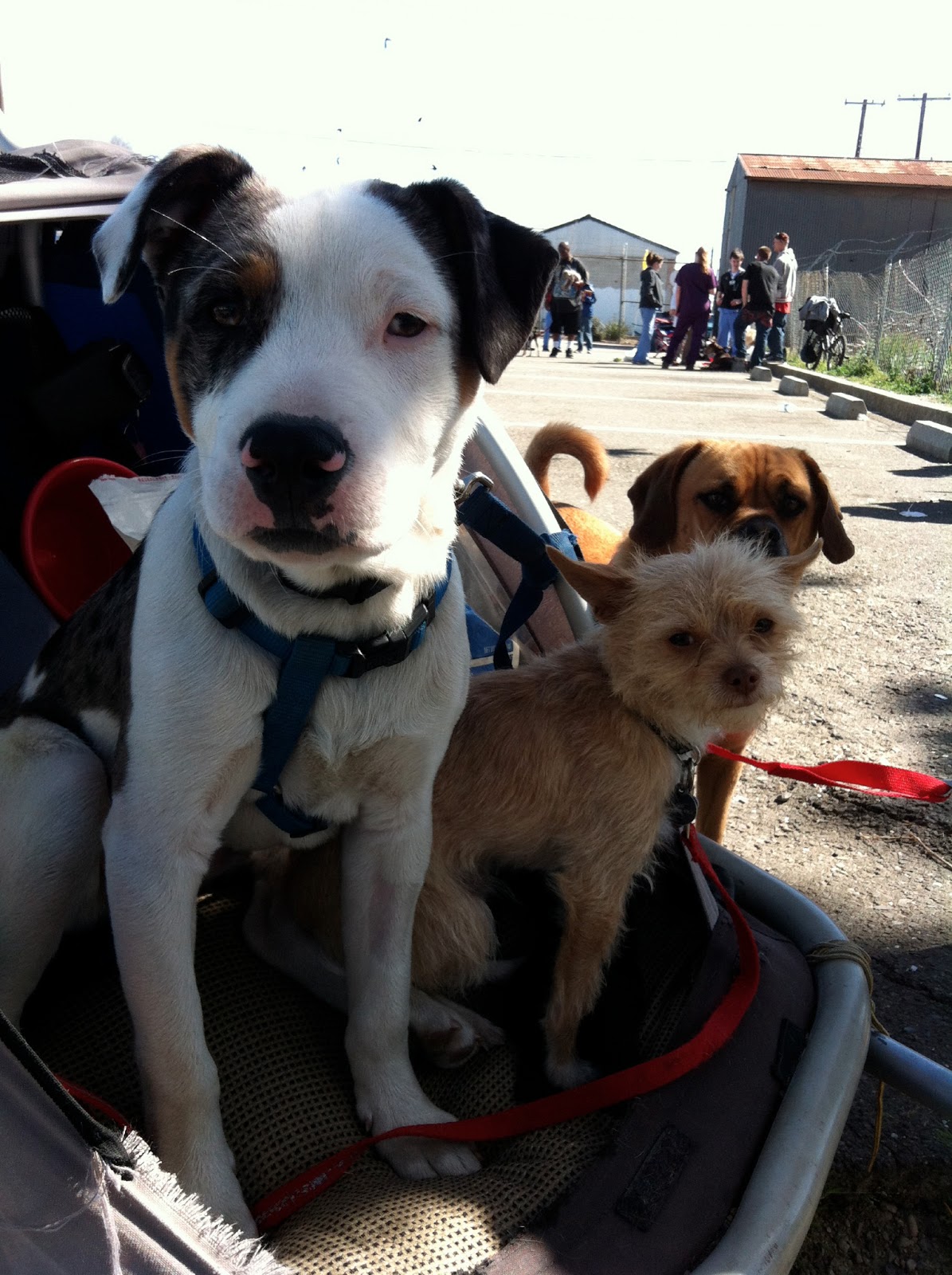
This weekend, I spent Saturday volunteering at the Mercer veterinary clinic for pets of the homeless. We had one of our busiest days in a long time - the parking lot was fun of clients and their furry friends. They were there early and formed a line that wrapped around the entire lot! I parked my car down the street from the lot where Mercer is held near Loaves & Fishes in Sacramento. As I was walking in, I saw a family trying to carry their two cats and walk their dog into the clinic - I took one of the cats for them and we walked in together. I feel so distant to these people in my ceil blue scrubs, but I know we're here for the same reason - for the animals. 

I say hi to the "regular" volunteers and the new clinic coordinators...man how Mercer has grown! It has become very efficient, better for clients, their pets and volunteers! I don't even come for the volunteer orientation because I know how Mercer works inside and out. I often work with new students or by myself. I had three clients that day. The first one was a "fast track" with two healthy Akita cross breed dogs that were just loosing their winter coats. I was happy to see their owner had brought them in for their wellness exams. I gave them through physical exams and sent them home with flea prevention and heart guard.  

The second client had two cats - one was a 14 year old hyperthyroid kitty who needed a blood sample to check his thyroid levels. The owner told me how important this cat was to her and how her life had changed recently in so many ways. I really try to listen to clients and sympathize with their situations - although all unique - this woman in particular had a really rough patch. I did my best to get a painless blood sample from the Siamese cat she adored very much - I made sure she was a part of the whole process and comfortable with my efforts. I had a lot of trouble because the cat was very hypovolemic (had low blood volume) and was slightly dehydrated making it difficult for me to take blood from him. I used a butterfly catheter in his medial saphenous vein - but the blood came out so slowly it clotted after I got about 0.5mL. I enlisted the help of Dr. Kendall who had about as much difficulty as I did, but managed to get me another 1mL of blood from the very vocal Siamese cat. The other cat was a healthy housemate who purred intensely when I examined her.

My third patient that day was a wonderful female lab that I have seen since I started volunteering at Mercer. She has chronic skin issues that flare up if she has any chicken in her diet. She is on steroids, antihistamines, and a special allergen free diet. She was looking great and had also lost weight (which is good for her because she was overweight). She's an old girl, but quite the companion for her dedicated owner who waits every month to get her dog's perscriptions filled. I clipped her long nails and sent her on her way.

We finished seeing all the clients by about 12:30! A record for any Mercer clinic - and we had a ton of clients that day - just a lot of volunteers (veterinary students and vet aides) and I think four volunteer veterinarians that made the day fly by. It's hard because donations for Mercer are down and we are lacking resources to get basic referral care for our patients. For example, some new clients brought in a puppy with a suspected broken leg who needed an X-ray, but since our budget is so tight, we were unable to send them for referral. I know it sounds harsh, but the funding is limited, thus carefully managed and we had to create rules as to how our resources are used in order to best serve clients we have. We are always open to accepting new clients that qualify for Mercer (aka ARE homeless and have a recent TB card), but unfortunately that is our only way to limit the program so we can help those in need.  

Some dogs that were helped at the Mercer clinic
On Sunday, I volunteered at the feral cat clinic at the Sacramento SPCA. I got there around 11am and jumped into action - helping at various stations moving cats along. It was a great day, we had 56 cats go through our clinic that day. While doing some anesthesia monitoring, I met a volunteering veterinarian who had an interesting story to tell. She was interested in starting a sustainable veterinary program in the bay area that focuses on the environment, people and animals, encompassing the idea of "one health". I was very impressed to hear about her background and how the idea came about. I'm really looking forward to hearing more about this exciting idea and I have to say it tore at my heartstrings to think about wonderful people like her out there who strive to make a difference in this world. Ideas like this shouldn't be shoved under the rug - although a quite ambitious plan, I know she has the power to make it happen. I took her contact info so hopefully someday in the future I might be able to help her in some way either on my own or by referring a friend.

One of my favorite dogs at the Mercer clinic
We did our last dog neuter, it turned out great and hopefully "Bug" will find his forever home. This week we are doing our first dog spay. I can't believe how fast veterinary school goes by - when you're in it, it feels like it drags on forever, but the people around you - your family and friends see it go by so fast. And as it gets down to my last quarter of classes (before I start clinics) - it finally feels like it is flying by for me too!

Our 3rd neuter patient
And last, but not least, today I attended a "Veterinary Forensics" talk given by Dr. Bing Dilts whom is a veterinarian featured on the Animal Planet show Animal Cops: San Francisco. She attended the University of California at Davis for nine years, where she received a bachelor's degree in animal science, a master's degree in animal science and a doctorate in veterinary medicine. Before coming to the SF Animal Care and Control in 1995, Dr. Dilts was employed as an equine veterinarian. The talk was pretty gruesome (it's aweful what people can do to animals) and Dr. Dilts is a really down to earth - no bull crap kind of person, but it was very interesting. 

To hear about how she got into this line of work was truly inspiring. It's amazing how she can take an animal who was neglected, make them healthy and happy and find them a new home. Other cases are not as lucky, but at least the last of their days are spent in a warm and caring environment with veterinary care, food, water and shelter. When I left the talk and was walking to Gourley to my dentistry lab, I thought to myself I want to grow up to be just like her! She does really cool things and prosecutes people who are responsible for cruelty and neglect. The talk was put on by the Shelter Medicine Club - which I am a member of and fully support. 

In my dentistry lab today we got to practice extractions on cadaver dogs - it was a great experience and made me feel more comfortable with dentistry tools and it was super fun!  

Only 2 more weeks until spring break! Can't wait for a little break!  

Friday, February 22, 2013

Crossroads

All the pieces are sliding into place, I can't believe how steep the learning curve has been these past 2 and a half years and that I am actually looking forward to how much steeper it will get. A lot of people who read my blog want to know what it's like to be a veterinary student - which can be very hard to describe at times. Well I will tell you right now, it's never easy - you are constantly trying to improve yourself and understand disease processes, clinical signs, while learning about the process of science and the latest discoveries. In addition to being a walking encyclopedia of knowledge and numbers - you need to be able to communicate with others. You will have owners wanting you to explain things in "lay terms" so that they can understand their pet's ailment. You will have to work with them to establish an affordable, appropriate treatment plan and find a way to train them that you need to follow-up on that plan. I find this part most difficult and as a client myself - I try to save money too. But I've learned that it's important to get routine health checks and follow up on any treatments - in the long run it saves you money.

Just so you can understand the "pieces" I am talking about sliding into place, I have 5weeks left of winter quarter. Only 10 weeks of spring quarter - which means in 15 weeks - I will start clinics! I will make the transition from student to clinician in training. No more multiple choice exams - but I will be quizzed daily on my knowledge and abilities. I will be taking national board exams in November 2013 - Only 9 months away!  Just today I got my account with Zuku to study for the NAVLE. If anyone is interested, they have tons of free practice questions that you can review - they also do a daily email question - I love these and have been receiving them since I started my undergraduate courses at UC Davis. Its never too soon to start.

Link to Zuku Daily Question Archive

Being a veterinary student is an amazing opportunity and although the job outlook is scary - and frankly, I still don't know what I'm going to do with my life, I'm still happy I pursued it. I am achieving my dream of becoming a veterinarian and I am thankful I'm studying at one of the nations top schools. During lectures with clinicians that are literal masterminds - I am constantly reminded of how much I don't know and the the little that I DO actually know

Last night, I had my animal CPR lab and although I've never taken a human CPR course - I have the general idea of the principal of the ABC's and how defibrillators work. But last night I learned more about CPR as it specifically relates to animals. I was able to work through several of the scenarios by applying my understanding of basic physiology, clinical experiences, and working with my teammates. As I led one of the scenarios - I realized how difficult it would be to make decisions that matter if the patient lives or dies and it was scary. After the lab I realized that I shouldn't be scared, we are faced with life or death situations in our patients every day. The lab really pieced together a lot of what I've learned and allowed me to apply myself to a stressful situation that requires fast thinking. Everyday I need to appreciate what I do know and strive to learn what I don't. 

I am not a person that has a photographic memory - I learn best by doing - using what I learn in real life situations. I always find that I need to review things that I don't use very often.     

475 days until graduation according to my countdown widget.