Disclaimer
The content of this blog reflects my personal experiences and opinions during my veterinary school education. It does not reflect the experiences or opinions of my classmates, colleagues, or the UC Davis School of Veterinary medicine. If you wish to contact me via email: hamaleo11@gmail.com
Monday, January 31, 2011
What is Vet School Like? Part 2
So I didn't mean to scare a lot of people with Part 1 of my "What is Vet School Like" post, but I want you to know that it's just different from undergraduate courses. Don't be afraid of what a vet school schedule is like, just be prepared to handle it. Well, quite honestly, I wasn't that "prepared to handle it" my first quarter, I was trying to figure out what study methods worked for me.
There are a lot of things I wish I would have done to prepare myself for Vet School and kind of had to figure out myself. I will highlight some of the things that will prepare you to be a successful vet student.
Know what study methods work for you and stick to them! If you don't know what type of learner you are, there are lots of online quizzes that will determine if you are more an auditory learner, visual learner, kinestetic learner, etc.
Also, choosing who to study with. Realize that as a veterinarian, you will be part of a profession, working with others in your profession is essential. Don't forget this, even in vet school! Your classmates are your greatest resources and guess what, you're all going through the same thing! You can get caught up in competition in your undergraduate education. Some people are very serious about getting into veterinary school. I understand your concerns, but once you are in vet school you are destined to become a veterinarian. You should no longer try to be so competitive with your classmates, you are now like a big family. You will spend every day together! Help each other out. Don't hesitate to work with others. If you make a really good study guide for an upcoming exam or find a really cool study link, share it with your classmates! They will only thank you for it and hopefully return the favor when you are in need.
Don't hesitate to get involved in some clubs, they can provide you really interesting lectures, field trips, and other events. You can also frequently get free lunch! I'm a member of the Veterinary Business Management Association which is a great club with really awesome events (this one is worth joining for the four years ~$30). I'm a member of SCAVMA, which is a really cool club on campus. They give money to campus clubs, student travel funds, and so much more. I'm also a member of the Wildlife Medicine Club even though I'm not really interested in practicing within the realm of wildlife, I find it very interesting to learn more about wild animals and how we can help them. They also have really cool speakers and field trips. I am a proud member of the Equine Medicine Club on campus and we have "rounds" every other week or so which includes dinner! It's great, cause we have one of the residents come in and go over some case examples with us. This is much funner than an actual lecture and I've learned a lot already. So these are just a couple of clubs I'm involved in. I'm also a writer for the Waggie (our vet school newspaper) and I co-write a professor interview section with one of my classmates. It gives me a great opportunity to get closer to my professors and get to know them on a more personal level. They also seem to enjoy being interviewed. There is such a thing as getting too involved, so I caution you to ease into club activities slowly until you know how much time and resources you can commit to them, but don't hesitate to try them out.
As a vet student, you are able to volunteer your time helping animals in so many different ways.
Fix Our Ferals
MERCER
Helping rescued llamas
Spay Day
Foal Team
Colic Team
and so much more!
Another thing I would encourage is that you keep yourself organized. Sometimes I literally have to block out time on my ical to work out or to go out with friends. You can easily get sucked into your studies, but make sure you do take SOME time to visit family/friends and just to let yourself relax. This will keep your friends around and help your sanity.
Before vet school starts, take some time to relax! Vet school is challenging and doesn't leave you a lot of spare time, so take the time to really relax while you can!
And by the way, we do have FUN in vet school! We have parties every other Friday or so, called (TG's) where we get a BBQ going, costco food, soda, and beer! Yes, we are one of the only parts of campus that have permission to have two kegs on campus! TG's are a great break from our classes and an easy way to mingle with friends/students/professors. Dogs are running around, it's great! We have additional parties too, like our halloween party, the turkey roast, the smoker, just tons of fun! Also, some of our professors go out of their way to impress us with a haunted anatomy lab, a barber shop quartet, and even funny music videos. Our professors try to have fun with us! It's not all bad, I am really enjoying it! You just can't take yourself too seriously or be too hard on yourself.
Saturday, January 29, 2011
What is Vet School Like? Part 1
I recently received a question from a pre-vet student asking, "What is Veterinary school really like? I have heard it is really hard, but I'm wondering if it is really that much different from undergraduate courses."
To answer your question, it is a lot different than my undergraduate courses.
Below, I have taken a screen shot of my ical for next week. These week is a typical week in vet school, although some weeks we have less classes or labs, but typically this is what our schedule is like. Although school is primarily what consumes my life, I also take advantage of extra curriculars like Colic Team, Veterinary Business Managment Assoc. (VBMA) meetings, and several lunch talks that are offered throughout the quarter. Some weeks there are less extra things to do, but typically I try to participate in club activities as well as spay/neuter clinics on the weekends. You may wonder, why not just focus on school and studying for my classes? Well a lot of my classmates choose to just study and not attend or participate in many extra curriculars, but I believe that doing these types of activities in addition to school is essential for my future as a member of the Veterinary profession. No one is going to care if I got an A or a B, I mean when I graduate from UC Davis SVM, I will be a veterinarian. Of course I want good grades and I do study several hours a day, even on weekends. I just feel that getting actual hands on experience in the field is a good supplement to the veterinary curriculum.
KEY:
VMD 421: Neurology
VMD 402B: Cardio Physiology
VMD 432: GI Anatomy
VMD 408: Animal Nutrition
VMD 430: Radiology
VMD 481: Case Discussions
VMD 401B: Anatomy of the head
We have additional classes throughout the quarter, such as Respiratory Physiology, some classes don't last all quarter. See below for this quarter's schedule.
I will be following this post with more about what vet school is like when I have more time, I'm off to study for Monday's Neurology exam!
Friday, January 28, 2011
Another Great Question from a Pre-vet!
"Since my application process I have continued to work at my animal related on campus job, but I have also been taking it easy as far as internships and hands on veterinary medicine goes. I fear that this will hurt me when it comes to the first question they asked you during your interview: "what have you been doing since you applied." I have focused on getting straight A's but other than that I have been trying to enjoy myself in preparation of a rigorous four years of veterinary school. What do you think? Should I try to get back into my old internships? Should I be concerned?"
No need to be concerned! It sounds like you've been doing great and are on the right track. My guess is that you had a lot of veterinary/animal experience before you applied? If this is true, then taking some time off from vet experience to focus on your GPA might be just what they are looking for. Continuing to work at your on-campus job (which is animal related) is great too! It shows commitment to working in the animal profession and commitment to a job in general. I think they will also notice that you've been able to both work and attend classes which shows them that you are hardworking. If you have gotten good grades since you applied, I would defiantly mention it when they ask you that first question during your interview, "what have you been doing since you applied?" That question shouldn't worry you to much, they usually use it as an opener for the interview to help you relax and they want to hear about you and how you have continued to be interested in veterinary medicine even after completing the application. If you do have a chance to volunteer (like at the MERCER clinic) for example, this might be a good way to add experience before your interview, but won't be a huge time commitment. If you don't get a chance to do this, that's fine too, I think grades are defiantly important and so is your job and affording school. If you have done any extra-curricular activities like attending club meetings or just being a member of a club in general, you can mention that. I know we have the vet aides club on campus, so if you are a member of that you could tell them that you have continued to be an active member of the vet-aides club by attending meetings and participating in other activities. Again, if you got good grades during this time, defiantly mention that when they ask you that first question. And by the way, I think taking some time to relax before starting a rigorous vet school program is defiantly a good idea! I wish I had done a little bit more of that before I started Vet School! You might be able to add that in somehow, like "I've taken a little time to myself to relax in preparation for starting a rigorous veterinary program." This will show them that you do know how to relax (which is an important trait in any veterinary student cause we're always so stressed out from classes/exams). Just be prepared that they might then ask you "what do you do to relax?" So come up with something to answer that. I hope this helps answer your question!
Thursday, January 27, 2011
Questions From a Pre-Vet
1) How many schools should I apply to? Some people told me three to five?
No matter where you go to vet school, you will earn your DVM, and will become a licensed veterinarian. I think it is important to apply to a vet school that you would be happy and proud of attending. Research prospective schools and go visit prospective veterinary schools and see if they are right for you. Do you like what their school has to offer, do you like the location, do they have a reputable program, have you meet their schools prerequisites. These are all valid questions you should ask when considering what vet schools to apply to. Also consider applying to a vet school in a state you are a legal resident of. I know for example, they don't have a lot of spots reserved for out of state applicants, so applying for a school in a state you have residency in might likely increase your chances of being accepted. It also doesn't cost as much cause you aren't paying out of state tuition. Now how many schools should you apply for? This is a very valid question. As an undergrad at UC Davis, I was once advised, "If I didn't apply to more than one vet school (UC Davis) then I obviously didn't want to be a veterinarian that badly." I actually took this advice to heart and actually it made me cry cause I knew in my heart that UC Davis School of Veterinary Medicine was the school for me. I was a junior at UCD at the time and I honestly think it's the worst advice I ever got. I do kind of agree in that applying to multiple schools may increase your chances of getting in to vet school, but if your heart is set on one school, why waste your time/money applying to other schools? I think I also took it to heart because I really did want to be a veterinarian even though I didn't really want to go to another vet school besides Davis (for various reasons, like having family less than an hour from UCD and besides the fact that I absolutely loved their program and teaching hospital, not to mention their faculty). It's important that you don't seem too desperate when applying to veterinary schools, I mean vet schools want students that want to go to their school. They want to know that you have done your homework researching their program and that they can offer you what you want. With all that said, I think it would be wise to apply to the schools you feel fit your needs/finances best. I would encourage you to apply to not more than 3, but I have heard of people applying for more than 5. So really, it is a personal choice, but this is my personal opinion. http://vetschoolinfo.blogspot.
2) What is an effective way to study for the GRE? Should I take classes?
3) What would you say is a competitive GPA?
If you look at the average applicant
http://sharonostermann.blog.
4) Most of my volunteer work is around small animals, which is what I want to focus on, but should I try to find experience in other areas
That's great you have a lot of experience with small animals since that is primarily what you are interested in, but I will warn you that the veterinary admissions committee is looking for a well rounded applicant. See my post about my personal experiences I had before applying to veterinary school: http://livingmydreamkn.
I would personally encourage you to get experience in other areas such as large animal, exotics, or even research. In vet school, we learn about all animals in our classes and it is important to have a basic understanding of large and small species.
Wednesday, January 26, 2011
Planting The Seed: Getting Kids Interested in VETMED
I had the chance to talk to a group of about fifty 7th graders about becoming a veterinarian. I received an email from the campus Veterinary Student Outreach program asking for a volunteer to go to Smythe Academy Middle School in Sacramento. After I received a second email pleading for someone to go and talk to these kids, I gave in. I couldn't let these kids go without a presentation on what role veterinarians have and how they can go to college someday and maybe become one! Even though I missed a little bit of class, I think it was greatly worth communicating the word "college" with these kids. These were not just any ordinary 7th graders, these kids are part of the AVID program at their school designed for kids interested in pursuing a college education. It is only my hope that I may have inspired some kids out there to pursue not only college but possibly a career in science or veterinary medicine. It feels good to be spreading the word about such a wonderful profession. It is sometimes difficult to not include my current feelings of stress and pressure in veterinary school, besides the fact I even managed to get myself here in vet school in the first place!
How to Rock Your Vet School Interview-Part 1
It's hard to believe that only a year ago, I was frantically checking my email waiting to hear if I had received an interview from UC Davis. I think I got the email mid-February and I remember being really nervous! I had made the first cut and landed an interview! I look forward to helping out at the Interview Workshop this year and hosting a possible future vet student when they come for their interview. I thought I would include a list of questions they asked me during my interview, I know it seems like a lot, but the interview goes by so fast!
What have you been doing since you submitted your application? (They will usually always start off with this one.)
How do you feel about the use of animals in research?
What have you learned from your animals in society class?
What is the organization on campus that regulates research animals and how do you manage pain in lab animals. (They asked me this because I had experience doing animal research on campus.)
What are typical vaccines for horses?
Why do we vaccinate horses and humans for tetanus, but not cats? (I didn't know this one, but they told me that it's because cats have a localized reaction and typically don't experience the neurological effects like horses/humans)
They asked me about my low GRE scores and what I had done to do better on the exam, why I felt my score was low, etc. (they congratulated me for being a first generation college student).
Would I be able to handle the busy schedule of a veterinary student?
Since most of my experience and emphasis was equine would I have a problem learning primarily about dogs/cats in the first 2 years of veterinary school?
What did I think about the overpopulation of horses problem and what would I do about it?
Can you make more clear if you are interested in clinical equine medicine or research? (I answered both)
What steps would you take after graduation to obtain a faculty position at a veterinary school? (I think they wanted to make sure I knew how crazy I was for wanting to pursue a faculty position and wanted to make sure I knew what it would take...years of more school!)
Where you see your self in 5-10 years from after graduation from vet school?
These are the majority of the questions I was asked, they seemed very friendly and enjoyed my interest in research and teaching. One of my interviewers made a joke after I told them what I had been doing since I submitted my application, "have a lot of spare time, don't you." He was funny and asked quite a few technical questions. Another interviewer focused on my interests and feelings towards working with animals as a vet. The outside veterinarian (I can't remember his name), but he focused on ethics and GRE scores. It was very nerve racking up until I went into the interview room. I felt like it went really well. I got there early and was in the waiting room and got to personally meet Dr. LeFebvre and his dog "Flow." He came to talk to someone there and while he was waiting asked me about my experiences at Davis and why I was interviewing, etc. He helped me warm up a bit.
I would highly recommend you do several practice interviews beforehand, these questions give you a lot to think about and you need a clear opinion on many ethical issues. I had to research more about equine welfare and the overpopulation of horses problem in the US. I even bought a veterinary ethics text. I don't really think that is necessary, there is a lot of info on animal welfare online. I learned a lot by doing this and was able to form an educated opinion about the issues. I also recommend that you read over your application a few times! I hope you saved it! You should really know your animal/vet related experiences inside and out and be able to give examples of what you did. When you go for your interview they have your application right in front of them!
I think it would be a good idea to know your strengths and your weaknesses. Identify problems or holes they may find in your application and come up with a good explanation for them. For example, I knew my GRE scores were low in the verbal and writing part, but I did excellent on the math part. My explanation for that was that I had taken the GRE 3 times and not really improved much on the verbal part, I did bring my writing score up a bit. I also mentioned that my parents did not go to college and I didn't have the opportunity to learn a lot of GRE type words when I was growing up. Anyways, knowing yourself inside and out is essential.
Tuesday, January 25, 2011
Designing our Class T-shirt
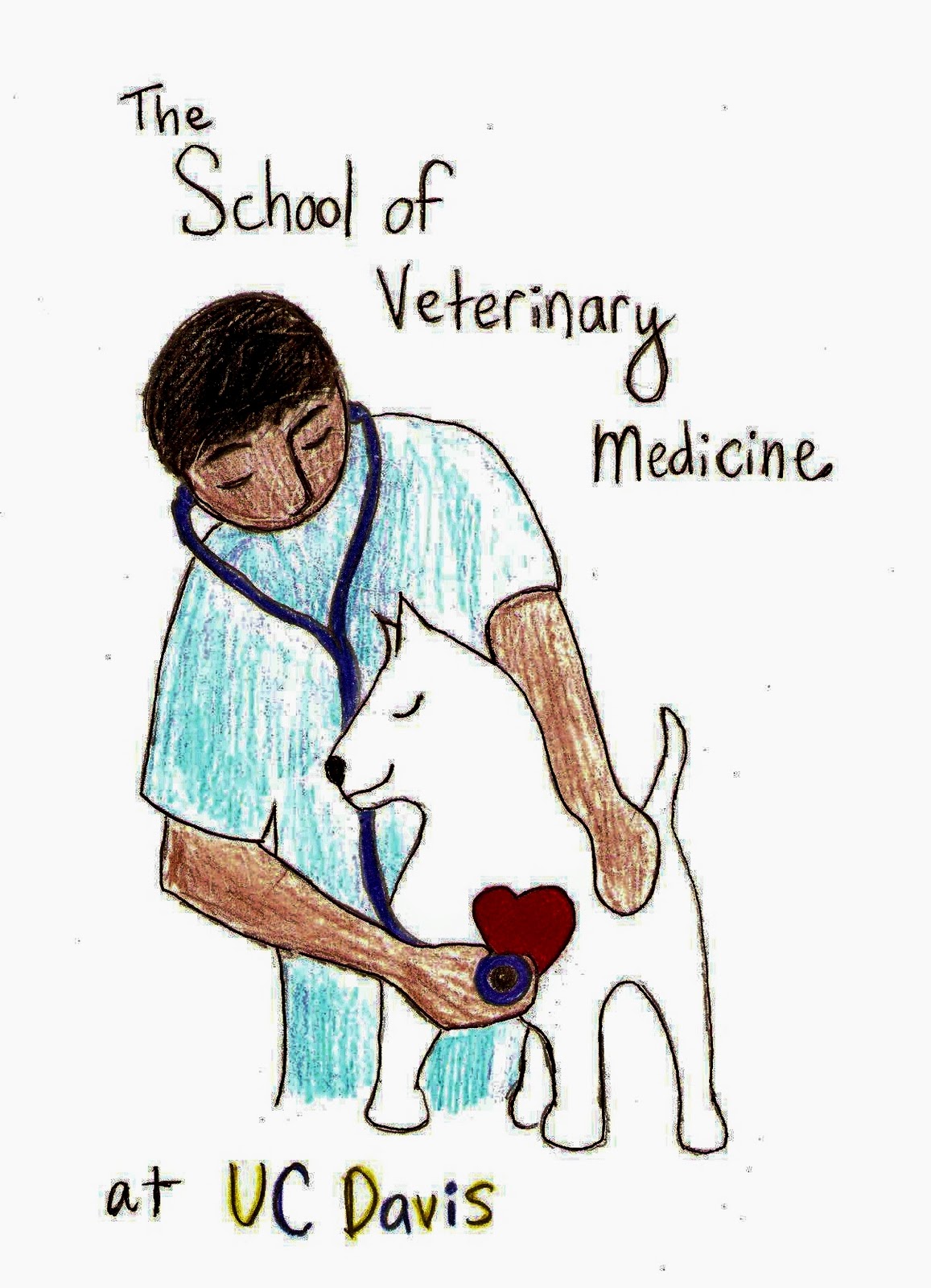
My sister is such a great artist, when given the task to design a shirt for the SVM class of 2014, this is what she comes up with. It is so cute! I love my sister so much and I hope she knows how talented she is. I also have to give credit to her boyfriend Josh who helped! Thanks Mel and Josh for such a wonderful T-Shirt Design! I hope it wins the design contest!
Love Sisterly
Love Sisterly
Subscribe to:
Posts (Atom)